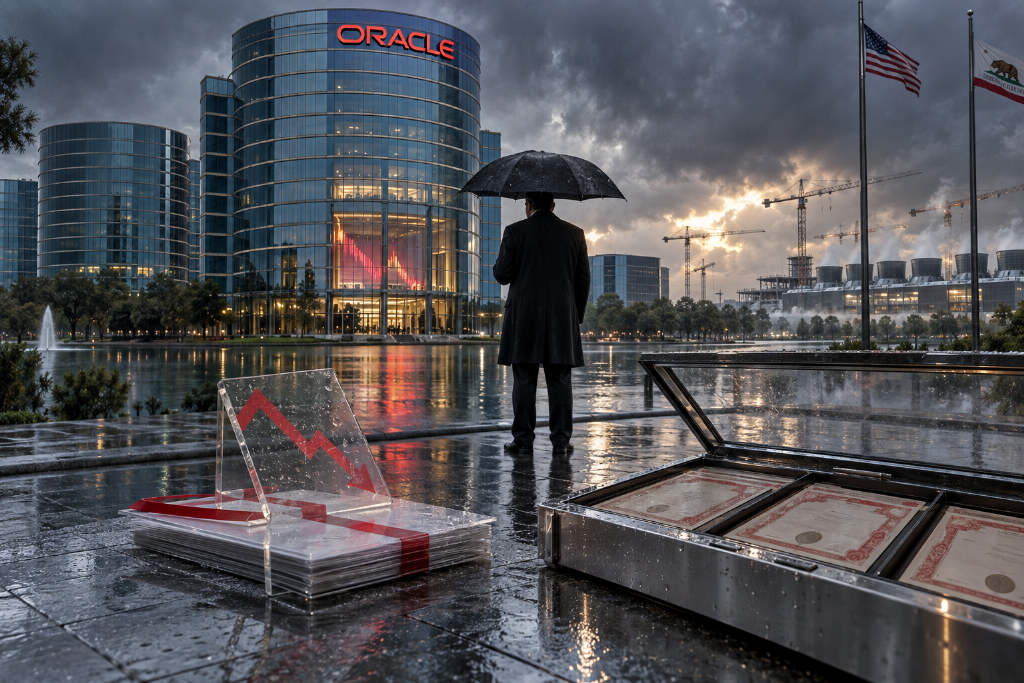
Oracle2026-09-27 00:17:28Oracle executives’ nearly $1 billion stock option awards fell out of the money after share slumpOracle founder Larry Ellison and co-CEOs Clay Magouyrk and Mike Sicilia received stock option awards in fiscal 2026 with a combined grant-date fair value of about $988 million, according to Fortune and the company’s latest regulatory filing. But the awards lost their intrinsic value by the end of the fiscal year after Oracle’s stock retreated to around $137 from an earlier peak, leaving all of the options out of the money. Ellison’s strike price was set at $280 per share, while the two co-CEOs received options with a $308 strike price. The company’s operating results still showed strong top-line growth: fiscal 2026 revenue rose 17% to $67.4 billion, and Oracle Cloud Infrastructure revenue climbed 77% to $18.1 billion. Remaining performance obligations increased from $138 billion a year earlier to $638 billion. At the same time, Oracle’s capital spending expanded to $55.7 billion as it invested in AI and data center buildouts, pushing free cash flow to negative $23.7 billion. The company also raised funds through $43 billion in senior notes and an equity issuance. Oracle’s board said the compensation structure is designed to reward executives only when shareholders benefit, and shareholders are expected to cast an advisory vote on the pay package at the annual meeting on Nov. 18, 2026.360
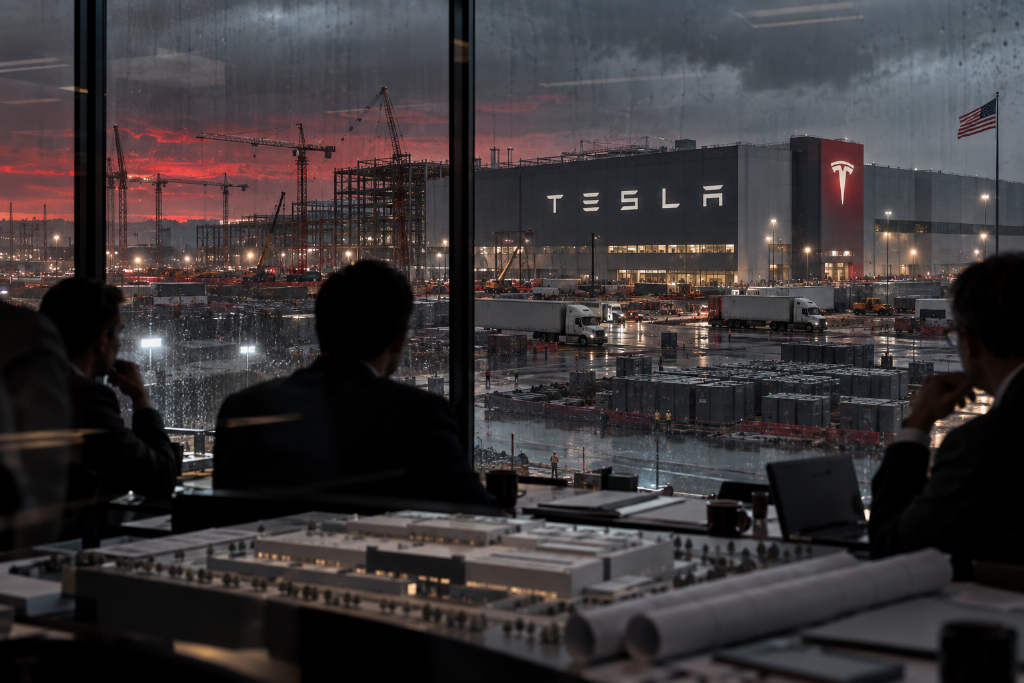
Fitch2026-09-21 21:50:43Fitch says Tesla investment cycle could push mid-term FCF into negative territoryFitch said Tesla’s planned investments will require a sharp increase in capital expenditure and could push the company’s free cash flow, or FCF, into negative territory in the medium term. The ratings agency also said this heavy investment cycle may add to Tesla’s debt burden. The update was cited by ChainCatcher in a brief newsflash. No further figures or timeline details were disclosed in the source beyond the reference to the medium term. The statement focused on two points: higher capital spending tied to these investments, and the possibility that the spending cycle could weaken cash generation enough to turn FCF negative while also increasing debt.340
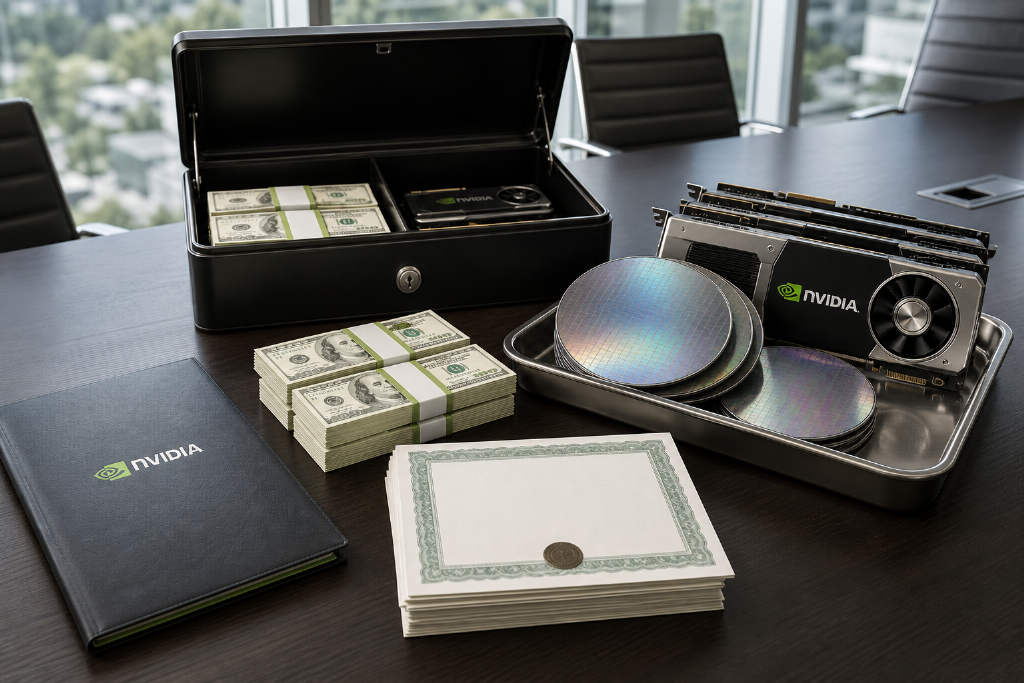
Nvidia2026-08-26 21:26:44Nvidia CFO says company plans to return more residual free cash flow to shareholdersNvidia Chief Financial Officer said the company plans to increase the amount of residual free cash flow returned to shareholders in the future. The comment specifies that the planned increase would apply to free cash flow remaining after strategic uses are accounted for. ChainCatcher carried the remark in a brief newsflash. No additional details on timing, scale, or the form of shareholder returns were disclosed in the source item.940
Fu Peng2026-08-24 14:20:48Fu Peng says AI trade has flipped as markets punish capital burn instead of rewarding expansionFu Peng said the market is now in a vacuum period where the thesis of a complete and viable AI commercial loop has yet to be proven or disproven, and that shift is changing how investors price companies. In his view, the earlier enthusiasm that rewarded heavy spending in the AI arms race has cooled, giving way to a framework that penalizes aggressive capital consumption. He pointed to the U.S. market’s punishment of Alphabet after free cash flow turned negative and the rotation toward Apple as a clear example of that change, adding that a similar pattern is now playing out among major Chinese internet companies. Fu said Alibaba’s capital expenditures surged this quarter, leading to continued net free cash flow outflows. If large AI computing and infrastructure spending cannot quickly produce profits on a comparable scale, he argued, the burden falls on offshore cash and raises fresh doubts about marginal returns on capital. Against a market that is already unconvinced about a full AI profit loop, he said that announcing large placements or convertible bond financing amounts to further shareholder dilution. Fu also cited Michael Burry’s reduction or exit from Alibaba and heavier positioning in JD.com as reflecting the same investor preference for companies with more restrained balance-sheet expansion, less pressure on free cash flow, and clearer buyback execution.1080
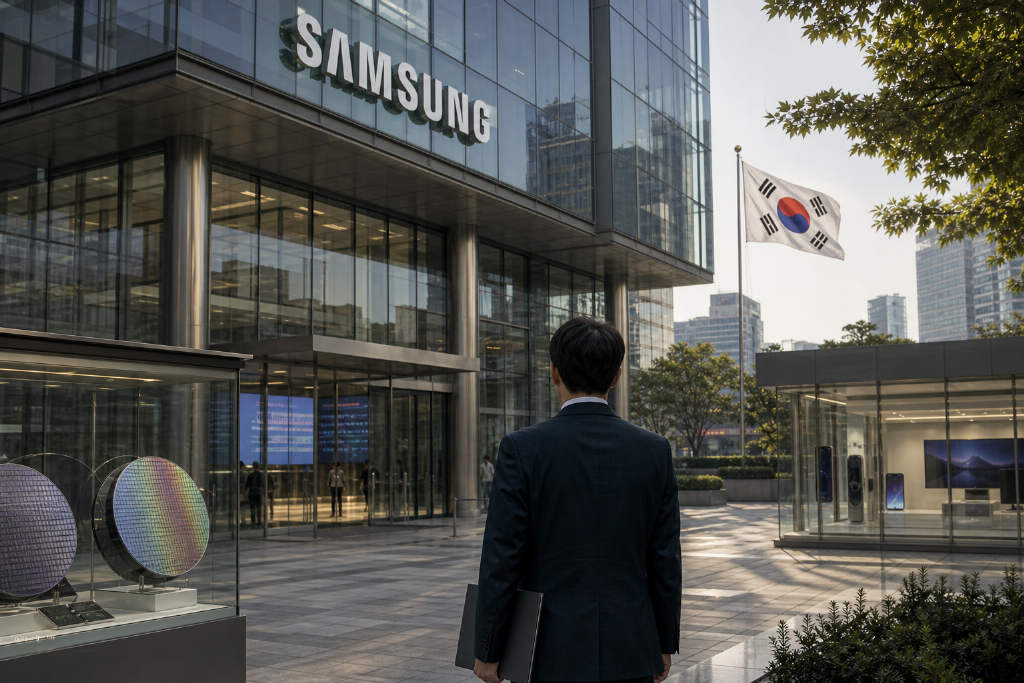
Samsung Elect2026-08-24 08:55:08Goldman Says Samsung’s Shareholder Returns Miss Short-Term Expectations, but FCF Growth Supports Valuation RecoveryGoldman Sachs said on Aug. 23 that Samsung Electronics’ 2026 shareholder return pool is expected to range between KRW 90 trillion and KRW 110 trillion, below what the market had been anticipating. The firm kept its Buy rating on Samsung’s common stock and a KRW 490,000 target price, which it said implies 74% upside. In Goldman’s view, the key driver of valuation recovery is not a one-off return size, but the continued expansion of free cash flow and a stable return mechanism. Samsung has outlined a phased payout plan, including about KRW 30 trillion in cash dividends in the third quarter, with the remaining amount to be executed after January 2027 results are confirmed. Goldman estimated Samsung’s 2024-2026 cumulative free cash flow at about KRW 270 trillion and said the company’s 2027 and 2028 return pools could rise to KRW 179 trillion and KRW 232 trillion, respectively, if the current 50% FCF payout policy remains in place. The report also flagged risks from weaker memory supply-demand conditions, a sharp drop in smartphone margins and further OLED market-share losses.1250
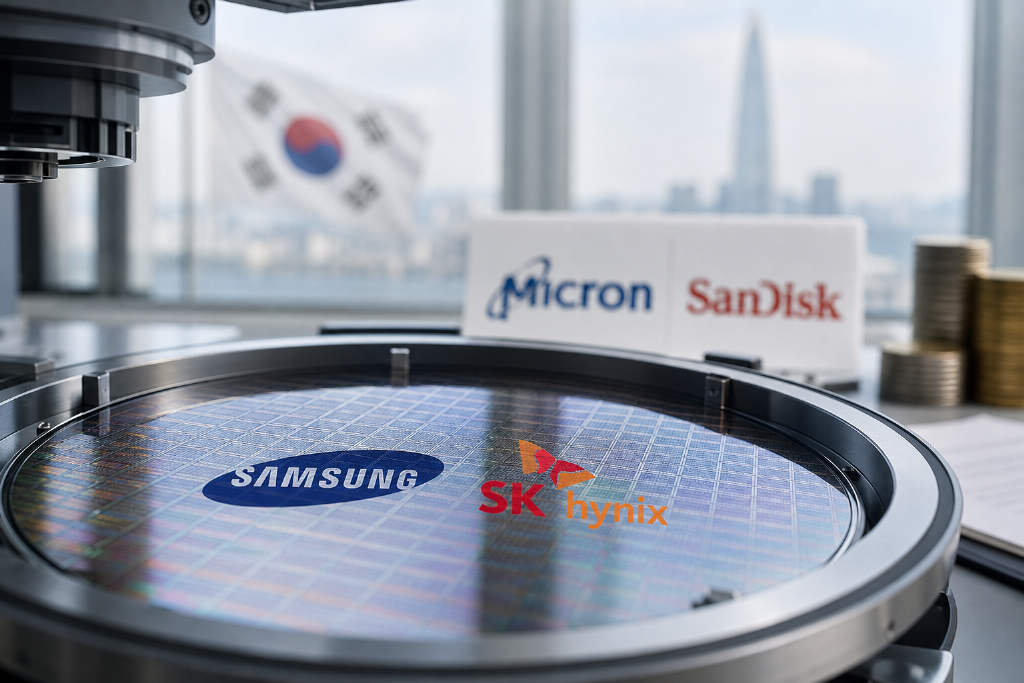
Samsung Elect2026-08-23 05:00:42Samsung and SK Hynix shareholder payout plans draw scrutiny as Micron and SanDisk cite 100% excess cash returnsSamsung Electronics and SK Hynix have come under scrutiny after outlining shareholder return plans tied to more than 50% of free cash flow, while SanDisk and Micron have put forward policies to return 100% of excess cash to shareholders. The comparison has fueled questions over whether Korean chipmakers are offering weaker shareholder returns than their U.S. peers. Korean industry sources and financial institutions, however, say the headline percentages are not directly comparable because the underlying cash metrics are different. In their view, payout frameworks based on free cash flow offer more certainty in projected amounts, execution standards, and disclosure. Free cash flow typically refers to cash generated from operations after capital expenditures and other investment spending are deducted, making it a figure that can be calculated relatively objectively from cash flow statements. Samsung has said 50% of cumulative free cash flow from 2024 to 2026 will be used for shareholder returns, while SK Hynix plans to allocate more than 50% of cumulative free cash flow from 2025 to 2027.1190
SK Hynix2026-08-19 06:52:00SK Hynix plans 40 trillion won buyback and cancellation, targets at least 50% of free cash flow for shareholder returnsSK Hynix plans to buy back 40 trillion won, or about $28.6 billion, of its shares and cancel them after repurchase to improve shareholder returns, according to a report cited by PANews from Caixin. The company also said it will allocate at least 50% of free cash flow to shareholder returns from 2025 through 2027 and is considering a larger payout through fixed and special dividends. Shares moved sharply in after-hours U.S. trading, rising more than 1% after earlier falling more than 3%.1130
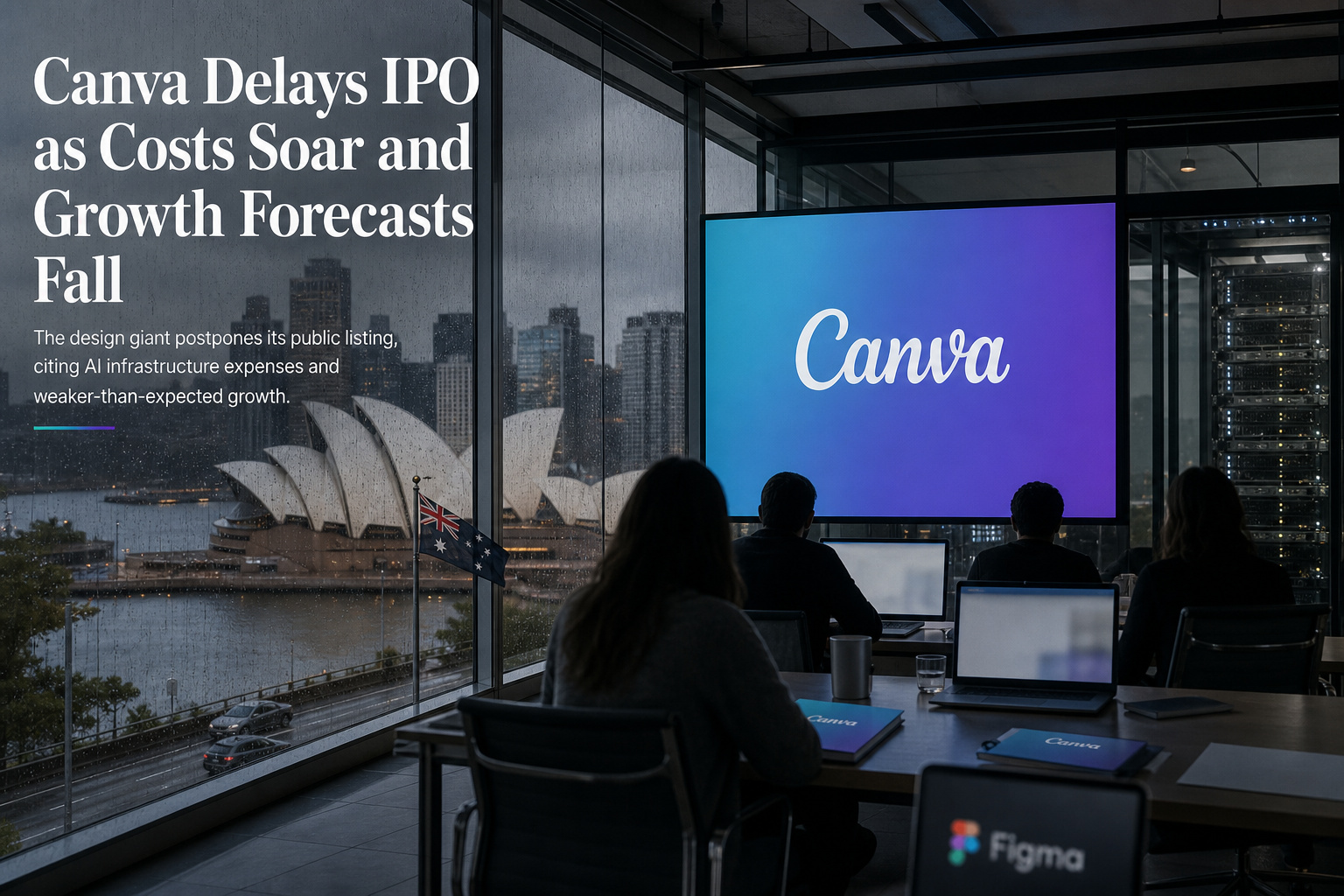
Canva2026-08-13 02:23:18Canva Cuts Annual Growth Outlook by a Third to 20% as AI Delivery Costs BiteCanva has cut its annual revenue growth target by a third to 20%, blaming AI feature delivery costs that ran far above expectations. CEO Melanie Perkins said user demand for the AI features was "significantly beyond expectations," but the company plans to hold off on large-scale rollout until it can optimize its architecture, lower unit costs and refine its business model. Since launching Canva AI 2.0 in April, per-task costs have fallen nearly 90%, yet AI users now generate three times as many designs as with the earlier version, keeping profitability under pressure. The situation points to a broader software industry problem: AI inference costs are breaking the traditional zero-marginal-cost economics of software. PitchBook analysts call Canva and Figma the most obvious signals. Figma's free cash flow margin slid from 27% in the first quarter to 14% in the second, with third-quarter revenue growth expected to slow from 48% to 36%. Canva, which conducted an employee share sale at a $42 billion valuation, was once expected to go public in 2026; analysts now believe the IPO may be pushed to next year.1400